
Ask three studios in Gurugram what paint protection film costs and you can get three very different numbers for what sounds like the same job. That is not evasion. PPF pricing moves with the film, the coverage, the car and the hands doing the work, and a quote only means something once those variables are pinned down.
This guide explains what actually sits behind a PPF quote in 2026 — coverage, film tier, car size, surface prep, warranty and installer skill — so you can read one properly and tell a fair price from a false economy. We have kept to ranges rather than a single figure, because the honest answer for your car depends on details a studio can only confirm in person.
Coverage is the biggest lever
The single largest driver is how much of the car you wrap. Studios quote in coverage tiers, and the jump between them is significant because film and labour both scale with area. Deciding your coverage first is the fastest way to make sense of a quote.
Film brand and tier: TPU, thickness and top coat
Not all film is the same material. Premium PPF is thermoplastic polyurethane (TPU), which self-heals light swirl marks with heat and resists yellowing. Cheaper film is often TPH, a hybrid that costs less but tends to discolour and stiffen sooner. Branded TPU from names such as Garware sits at the higher end for good reason.
Within a brand, tiers differ by thickness — typically around 150 to 200 micron — the strength of the hydrophobic top coat, the finish (gloss or matte) and self-healing behaviour. A thicker film with a better top coat costs more up front and generally lasts longer, which is largely where the 5-year and 8-year tiers separate.
Car size, complexity and surface prep
A compact hatchback takes less film and less time than a full-size SUV or a sedan with sculpted panels, so size feeds directly into cost. Wide bonnets, large bumpers and complex curves need more material and more careful wrapping to sit flat without stretch marks.
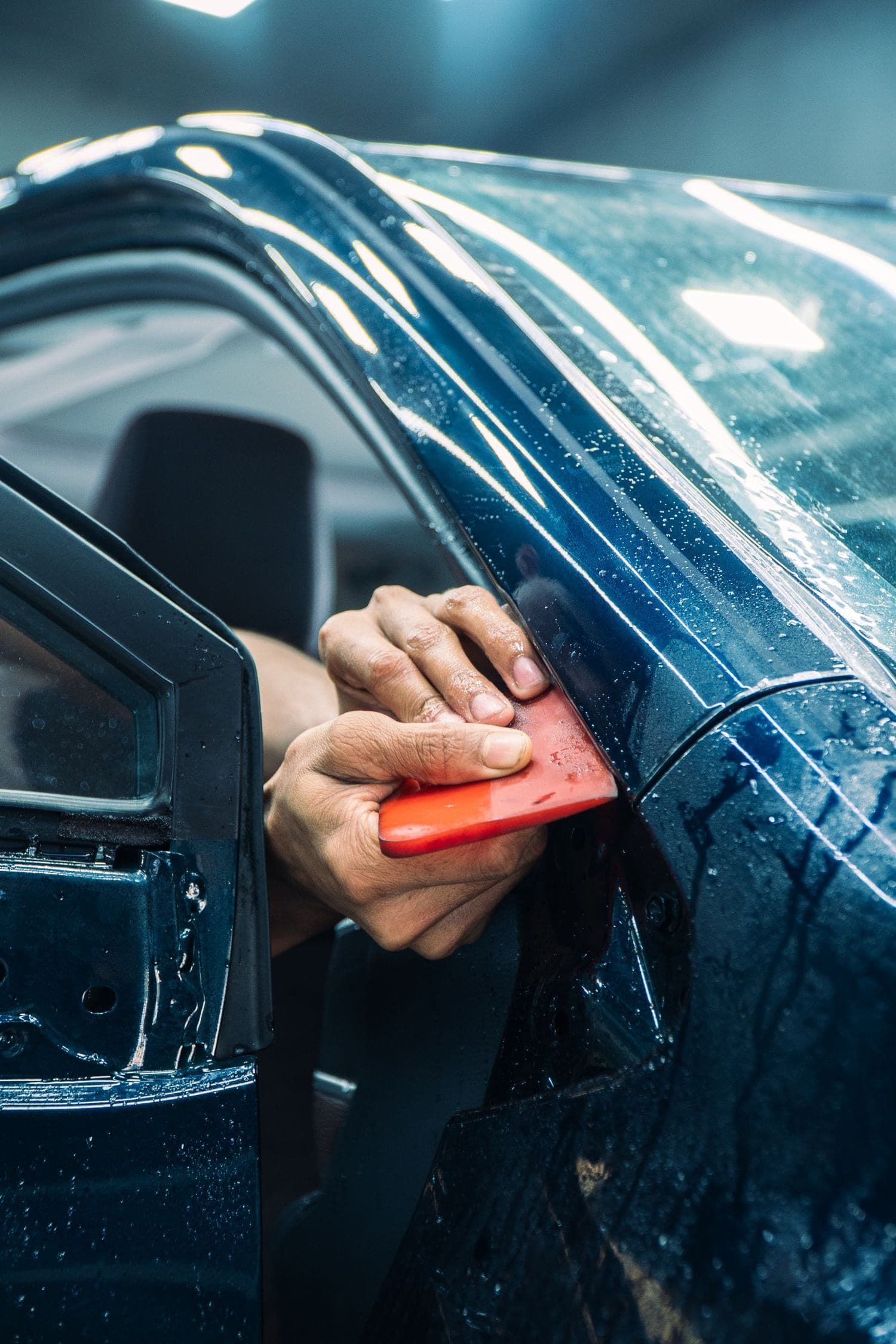
Preparation matters just as much. Film is transparent, so it locks in whatever is underneath. A proper install includes decontamination and, where needed, paint correction to remove swirls and light scratches before wrapping. That correction is real labour and can appear as its own line item, but skipping it means sealing flaws under the film for years.
Warranty: length and what it actually covers
Warranty length is a genuine cost input, not a marketing number. An 8-year film generally uses better raw material and a stronger top coat than a 5-year film, which is part of why it costs more. What matters most is reading what the warranty actually covers.
A written warranty typically covers manufacturing defects such as yellowing, cracking, bubbling and delamination. It does not cover accident damage or normal wear, and it usually depends on professional installation. Ask for the warranty in writing, in the studio's name as well as the manufacturer's, before you commit.
Why very cheap PPF is a false economy
A quote far below the rest is usually buying you a lesser film, a rushed install, or both. The costs show up later rather than at billing, and they tend to be visible ones.
Removing and redoing a bad wrap costs more than doing it once with the right film and a careful installer. The cheapest PPF is rarely the cheapest over the life of the car.
What to budget in Gurugram for 2026
With those variables in mind, here are working ranges for a mainstream premium car. Treat them as a starting frame rather than a fixed quote, and expect larger cars and top-tier film to sit at the upper end.
These are indicative for 2026 and shift with film availability and the specific car, so confirm current pricing for your make and model with the studio before deciding. A written quote against a named film and warranty is worth more than any number on a page.
Why PPF pays off on Delhi NCR roads
Local conditions make the argument concrete. Delhi NCR pairs fine construction dust and long summers with a hard monsoon and gravel-strewn highways, and stop-start traffic throws up chips at exactly the front-end zones PPF protects. The film takes the abrasion so the paint underneath stays original.
That original paint is also a resale asset. A premium car whose factory finish is intact, with no repaint on the panels, tends to hold value better in a market where buyers inspect closely. For many owners the film pays back partly through the eventual sale.
The right way to price PPF for your car is to walk a studio through the make, the paint condition and how you drive, then get a written quote against a specific film and warranty. If you would like that worked out for your car, our team can inspect it and talk through the coverage and film tiers that suit how you use it.