

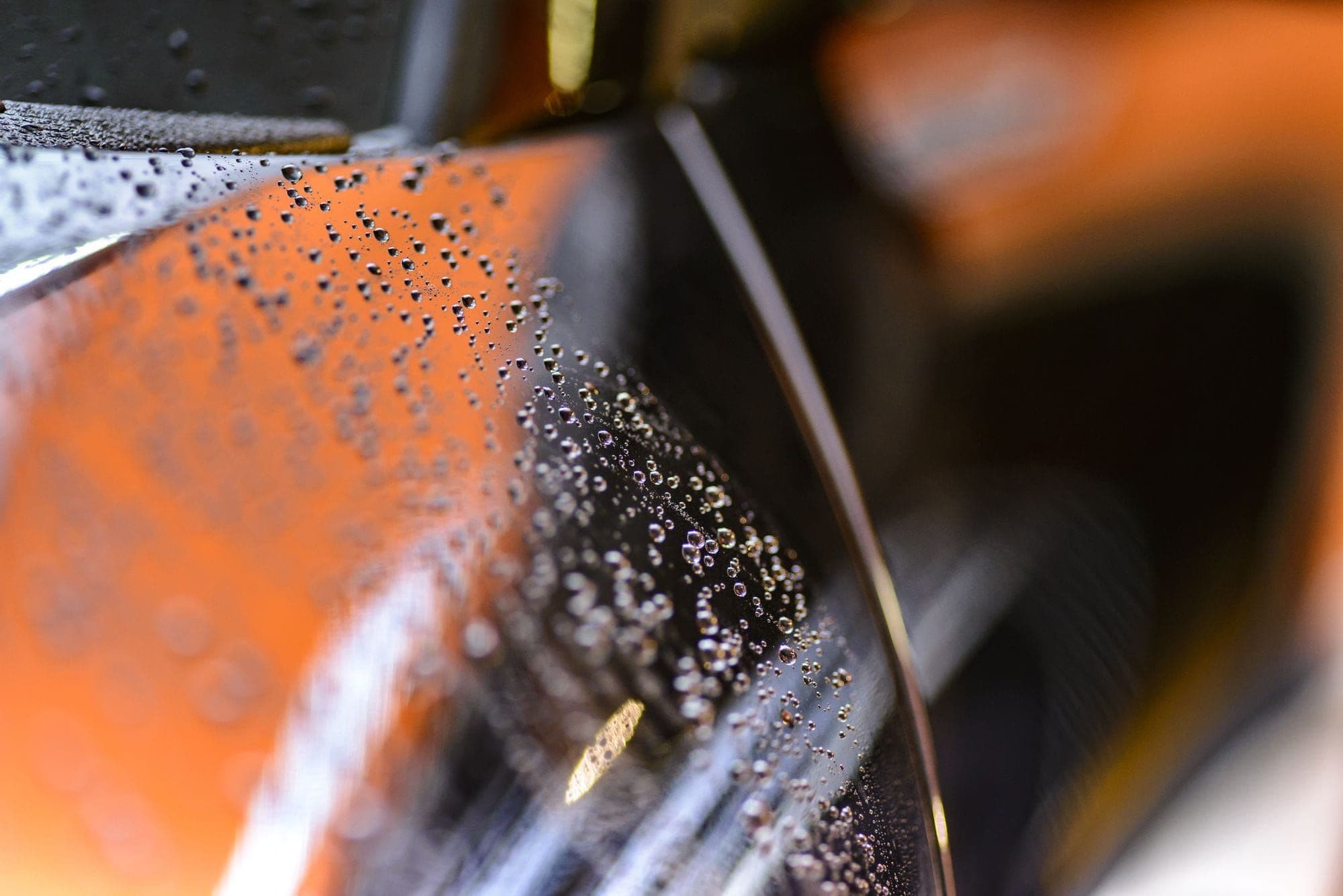
A ceramic coating changes how your car handles dirt, water and UV, but it does not make the paint self-cleaning. The coating is a thin, hard, hydrophobic layer bonded to your clear coat, and it holds its gloss and beading only if you wash it the way it was designed to be washed. Get the routine wrong and you can haze the surface, drag in fine swirls, or etch water spots into the coating within months.
This is the maintenance routine we hand to clients after a ceramic or graphene application. None of it is complicated, but the details matter, especially in Delhi NCR where fine dust, hard water and long summers work against every finish.
Why a coated car still needs the right wash
A quality 9H or 10H coating adds a thin, hard layer and lowers the paint's surface energy, so grit rinses off more easily and water beads and sheets away instead of clinging. What it does not do is dissolve the dust, brake particles and road film that settle on your car every day in Gurugram. That contamination still sits on the coating, and dragging it across the surface with the wrong cloth scratches the coating itself, not the clear coat beneath. Correct washing is lifting dirt away with as little friction as possible.
Start with the right kit
Three things protect a coating more than anything else: a pH-neutral shampoo, clean water in the right containers, and a soft mitt you keep off the ground.
The wash, step by step
- Work in shade on cool paint. Direct sun and a hot panel make shampoo and water dry too quickly, which is the main cause of streaks and mineral spots.
- Rinse the whole car first, top to bottom, to flush off loose Delhi dust and grit before anything touches the surface. This single step prevents most wash-induced scratches.
- Wash top-down, one panel at a time, using straight overlapping passes rather than circles. The lower a panel sits, the dirtier it is, so leave sills, bumpers and wheels for last.
- Between every panel, rinse the mitt in the clean bucket and drag it across the grit guard, then reload with shampoo. Grit lives in the mitt, not in the bucket you can see.
- Rinse each section before the shampoo dries, then give the whole car a final open-hose sheeting rinse to pull most of the water off in a wave.
- Dry immediately with a clean microfibre or blower, following the same top-down order so nothing is left to evaporate on the surface.
What quietly wrecks a coating
Most coating damage is not dramatic; it builds from a few habits that feel convenient at the time.
Drying, water spots and Delhi's hard water
Water spots are the most common complaint we hear from coated-car owners here, and they are almost always a hard-water problem. Groundwater across much of Delhi NCR carries dissolved calcium and magnesium; when a droplet dries on a panel, those minerals stay behind as a raised ring that can etch the coating over time. Never let the car air-dry. Sheet the water off with a final rinse, then lift what remains with a clean microfibre or a blower. If you wash at home with borewell water, a distilled-water final rinse is worth the small cost.
How often, and staying ahead of contaminants
For most owners a proper wash every one to two weeks keeps a coating performing. Wash sooner after a dust storm, a stint on unpaved or construction-heavy roads, or the first rain of the monsoon, when airborne grime and acidic water arrive together. Between washes, rinse bird droppings and sap off the same day rather than letting them set. Where you park matters as much as how you wash, so avoid sap-shedding trees and bird-heavy ledges.
A ceramic coating does not take maintenance out of the equation. It rewards good maintenance and punishes bad, which is exactly why the wash routine matters more, not less.
Toppers and the annual inspection
A coating's slickness and beading fade gradually as road film builds up. An occasional ceramic booster, or topper, applied after a wash every few months refreshes the hydrophobic layer and pushes back deeper maintenance. It is not a substitute for correct washing, though: it works only on a clean surface and does nothing to reverse damage already ground in.
This is where the free annual inspection that comes with our coatings earns its place. A check under studio lighting shows whether the coating is still bonded and beading as it should, catches early water etching or contamination, and lets us apply a maintenance layer before small issues become permanent. Think of it as a service interval for your paint.
Wash it gently, dry it properly and stay ahead of Delhi NCR's dust and hard water, and a good coating will hold its finish for years. If you are unsure which products suit your coating, or want us to look over how it is wearing, we are glad to talk through a maintenance plan over WhatsApp or at the studio.